Completion and Return
Honoring the close of the Snake year and the body’s rhythm of renewal
REFLECTIONS
Shannon Korczynski
2/15/20262 min read
There has been a noticeable shift in these past weeks. With the turning of the Lunar New Year, the symbolism of the Fire Horse, and the sense of seasonal transition that often accompanies this time of year, it is natural to feel movement both externally and internally. Periods like this often bring a subtle sense of adjustment as the body and mind respond to change in rhythm and environment.
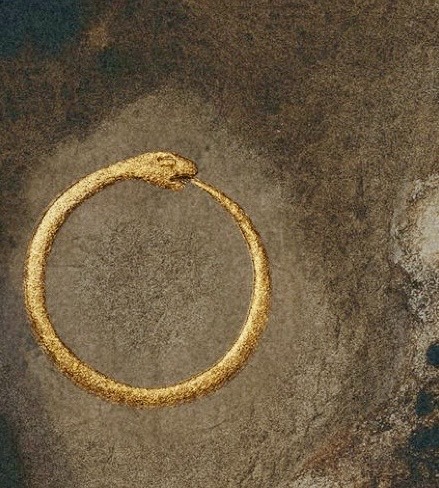
As the Year of the Snake draws to its close this week, there is also a sense of completion present. The snake is often shown as a circle meeting its own tail, an image that reflects cycles finishing and preparing to begin again. With the close of this year, that feeling of return and renewal becomes more noticeable. Something completes, and something prepares to move forward.
When change gathers in this way, it is common to respond by increasing effort. Many people find themselves trying to organize more, decide more quickly, or move forward with greater intensity. The instinct often comes from a desire to remain steady while circumstances shift.
Yet healing processes within the body rarely follow the pace we try to impose upon them.
In biological dental health, this pattern appears frequently. Individuals seeking remineralization often hope for rapid strengthening of enamel or immediate reduction in sensitivity. This can lead to more forceful brushing, frequent product changes, or the addition of multiple supplements in a short period of time. The motivation is understandable, as improvement is both desired and reassuring.
However, tissues restore function most effectively when conditions are stable and supportive rather than intensified.
A similar pattern can be observed in broader wellness and beauty approaches. Efforts to suppress muscular movement or conceal surface changes often aim to accelerate visible results. While these methods may alter appearance, they do not necessarily support underlying tissue health or long-term function.
Biological healing tends to follow a different path. Cells respond to consistent mineral availability, balanced saliva, adequate rest, and organ systems that are not overburdened. Remineralization occurs as minerals become properly available within the oral environment. Connective tissues regain suppleness as systemic tension decreases. These shifts are gradual and cumulative rather than immediate.
For this reason, periods of seasonal transition can be approached with simplification rather than intensification. Small adjustments often provide meaningful support. Earlier sleep timing, exposure to natural morning light, and the use of even a single cell salt aligned with seasonal organ needs can gently assist the body in adapting to change.
These measures may appear modest, yet they align with how biological systems restore equilibrium.
Seasonal cycles progress in their own timing, and human physiology follows these rhythms. When support is steady and appropriate, adaptation occurs naturally. When pressure increases, strain often follows.
If this period has felt unsettled, it may simply reflect the turning of cycles rather than a problem requiring correction. Maintaining rhythm, supporting organs associated with the season, and allowing gradual adjustment can ease the transition.
Healing processes are not driven forward by force. They develop through continuity, nourishment, and respect for the body’s inherent timing.
As this cycle completes and a new one begins, it may be a fitting moment to welcome change with steadiness rather than urgency, allowing what is ending to settle and what is beginning to unfold in its own measure.
If you are navigating changes in your oral health, mineral balance, or seasonal adaptation and would like individualized guidance, you are welcome to explore consultation options and educational resources through my Linktree. I share ongoing insights, tools, and support there for those who wish to continue this work more closely.
I would love to see you there.
Connect
shannon@evokehealingsdk.com
Follow Our Healing Journey
Receive Healing Insights Newsletter
713-478-4567
Privacy Statement: At Evoke Healing, we highly value your privacy and confidentiality. Any personal information you share with us, including your name, contact details, or health-related information, will be handled with the utmost care and used exclusively for providing our services and enhancing your experience with us. We do not disclose, sell, or distribute your personal information to third parties without your explicit consent, except where required by law. Our website may utilize cookies or similar technologies to enhance functionality and collect anonymous usage data for analytical purposes. By using our website, you consent to the collection and use of your personal information as outlined in this privacy statement.
Legal Disclaimer: The information provided by Evoke Healing is intended for educational and informational purposes only. The content on our website, in our publications, or during consultations is not intended to diagnose, treat, cure, or prevent any disease or medical condition. Our services and recommendations should not replace professional medical advice, diagnosis, or treatment. We strongly advise consulting with your dentist, physician, or qualified healthcare provider before making any changes to your health or dental care regimen. Any reliance on the information provided by Evoke Healing is at your own discretion and risk.
To substantiate the claims made in our content, we reference various peer-reviewed medical articles and studies published in reputable medical journals worldwide. However, it's crucial to recognize that research in the field of holistic health and the mouth-body connection is continuously evolving, and individual outcomes may vary. The information presented on our website is based on our current understanding and interpretation of available evidence.
We encourage you to utilize the information from Evoke Healing as a starting point for your own research and to make informed decisions in collaboration with your healthcare professionals. We disclaim any responsibility for consequences arising from the use or misuse of the information provided on our website or through our services.
By accessing and using our website or engaging with our services, you acknowledge that you have read, understood, and agreed to the terms and conditions outlined in this legal disclaimer.